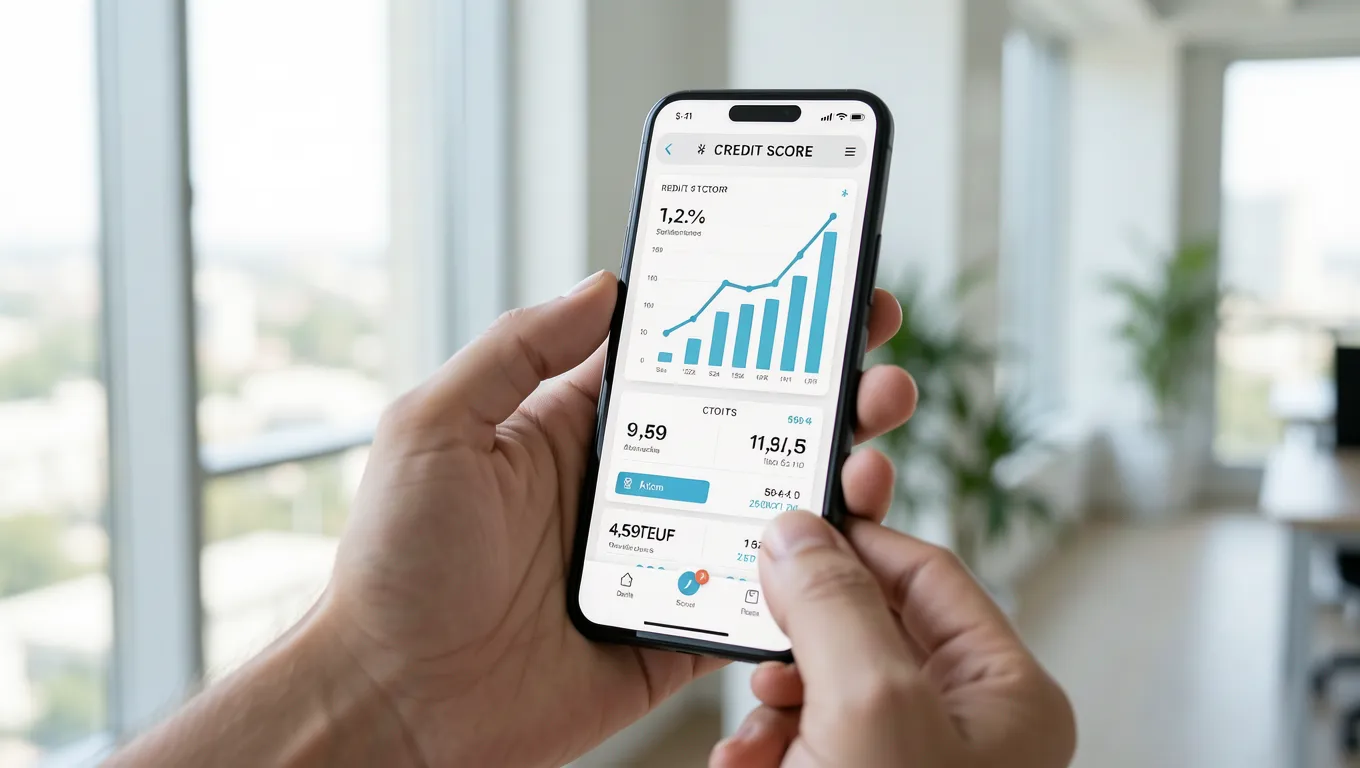
We help you connect with lenders who specialize in subprime profiles. Start exploring your options for 2026 without impacting your score.
No hard credit pull · Takes 2 minutes
Won't impact your credit score
Fill out our quick, secure form with your basic financial information and the amount you may need.
Our system scans a network of lenders to find those who might accept your specific credit profile.
Review the available offers side-by-side and choose the one that best fits your budget in 2026.
Finding a way to secure funding when your credit history is less than perfect requires a strategic approach, especially in the evolving financial landscape of 2026. While many traditional banks may hesitate to offer favorable terms to those with subprime ratings, specialized lenders often look beyond just a single number. They might consider your debt-to-income ratio and consistent employment history as vital indicators of reliability. It is important to remember that while an APR range 6%–36% is common for standard loans, those with lower scores may face rates on the higher end of that spectrum or even beyond it depending on the lender.
Instead of being shut out by high-street banks, many borrowers are turning to alternative financing. These lenders often utilize more comprehensive data points than just a FICO score, which can include your history of utility payments and rental consistency. This means that if you have worked hard to maintain steady income, you may still find viable options even if your credit report shows past setbacks. It is essential to approach this process with the goal of long-term stability rather than just immediate cash.
When searching for explore options that suit your situation, always prioritize transparency. Understanding exactly how much you will owe in total interest is more important than the initial approval notification. As we move through 2026, the availability of these products continues to change, so staying informed on current market trends can help you make a decision that supports your overall financial health.
The market for subprime financing has shifted significantly as we move through 2026. Many consumers are finding that flexibility is the key to financial recovery. Instead of being shut out, many people use these loans as a tool to bridge gaps in their monthly cash flow or to manage sudden life changes. However, it's crucial to understand the long-term implications of borrowing at higher interest rates. According to data often cited by the FTC, understanding the total cost of your loan—including any potential origination fees—is essential before signing any agreement.
For those who are currently dealing with Bad Credit, it is vital to recognize that a loan can be both a lifeline and a potential burden. If used responsibly for debt consolidation or emergency expenses, it can help rebuild your standing. However, if the interest rates are not carefully managed, they can lead to a cycle of debt. This is why we recommend comparing multiple offers rather than accepting the first one you see.
In 2026, many lenders have integrated more advanced machine-learning models to assess risk. This means that your behavior—such as how often you check your credit or how you manage your current Fast Loans Bad Credit obligations—could play a role in the rates offered to you. By understanding these mechanics, you can better prepare for the application process and increase your chances of finding a lender that matches your needs.
| Lender Type | Typical APR Range | Common Requirements | Speed of Funding |
|---|---|---|---|
| Traditional Banks | 8%–28% | High Credit Score Req | Slow Approval |
| Online Lenders | 12%–35% | Moderate to Low Req | Fast Funding |
| Credit Unions | 6%–20% | Membership Required | Variable Speed |
| Subprime Specialists | 25%–36%+ | Minimal Score Req | Very Fast |
| Secured Loan Providers | 10%–30% | Collateral Needed | Moderate Speed |
While your credit score is a major factor, it isn't the only one that determines whether you may qualify for a loan. Lenders in 2026 are increasingly using alternative data to assess risk. This can include your history of utility payments, rent consistency, and even your overall credit utilization across various accounts. A high debt-to-income ratio—where your monthly debt obligations are large relative to your gross income—can be a significant hurdle for many applicants. Lenders want to see that you have the capacity to take on more debt without defaulting.
To increase your eligibility, it is often helpful to provide clear documentation of your income. This might include recent pay stubs, bank statements, or tax returns from the previous year. Providing this information upfront can show potential lenders that you are a stable borrower despite what your credit score may suggest. The goal is to prove that while your past may have had challenges, your present and future financial behavior is reliable.
Furthermore, many people find success by looking into explore options within the credit union space. Credit unions often have different risk tolerances than large national banks and may offer more personalized service to those working on their credit rebuilding journey. Regardless of which route you take, being prepared with accurate data is your best defense in a competitive lending market.
When evaluating personal loans with low credit scores, the interest rate is often the most significant variable. Because lenders are taking on more risk when working with subprime borrowers, they typically charge a premium to offset that potential loss. This means you might see an APR that reflects the higher risk profile of your account. It's important to differentiate between fixed-rate installment loans and variable-rate options. A fixed-rate loan provides predictable monthly payments, which is often safer for those managing a tight budget.
In addition to interest rates, you must be aware of origination fees. These are one-time charges taken from your loan proceeds at the start of the term. For example, if you borrow $5,000 with a 3% origination fee, you may only receive $4,850 in hand, even though you are responsible for repaying the full $5,000 plus interest. Always calculate your total cost of borrowing to ensure the loan remains affordable over its entire lifespan.
The Frequently Asked questions regarding these fees often highlight how they can significantly impact the effective APR. The CFPB emphasizes that lenders must be transparent about these costs. If you find yourself comparing several offers, always look at the APR rather than just the monthly payment; the APR includes both interest and many of these extra fees, providing a more honest comparison of what the loan will actually cost you in 2026.
Navigating the world of subprime lending requires a keen eye for detail to avoid pitfalls. Some lenders may offer quick approvals but include terms that are difficult to navigate, such as excessive prepayment penalties or hidden fees. It is vital to read every line of your loan agreement carefully. The CFPB emphasizes the importance of transparency in lending; therefore, you have a right to know exactly how much interest you will pay over the life of the loan before you commit.
One common pitfall is falling for loans that offer 'guaranteed approval' without any credit check. While these might seem attractive when you are in a pinch, they often come with astronomical rates and terms that make it nearly impossible to repay the debt. Instead, look for reputable lenders who use legitimate verification processes. A lender that asks about your income and employment is actually showing a level of due diligence that can protect both parties.
As we navigate 2026, being an informed consumer is your best tool. Always ask if there are any penalties for paying off the loan early. If you have extra cash in a given month, being able to pay down the principal without penalty can save you hundreds of dollars in interest over time. This proactive approach turns a potentially stressful debt into a manageable and helpful financial instrument.
Your payment history is the most significant factor in your score. Ensure you make at least one minimum payment on every account every single month.
Try to keep your total credit card balances below 30% of your available limit to show lenders you aren't overextended.
Check your reports from Equifax, Experian, and TransUnion. Disputing a single mistake could potentially boost your score significantly.
Each time you apply for credit, it may trigger a hard inquiry. Avoid multiple applications in a short period to prevent score drops.
We scan multiple lenders in seconds to find matches for your specific profile.
Your data is protected with industry-leading encryption and privacy standards.
Comparing rates through our platform does not commit you to any specific loan or lender.
We believe in clear information so you can make the best choice for your 2026 goals.
Adjust the sliders to see an instant estimate. Actual rates depend on your credit profile.
* Estimate only. Actual rate and terms depend on lender approval.
Estimated Monthly Payment
$332.14
per month for 36 months
No impact on your credit score